

The Devil Wears Prada 2 Knows You’ve Been Duped
Forget Paris or Milan, go on a guilt trip instead

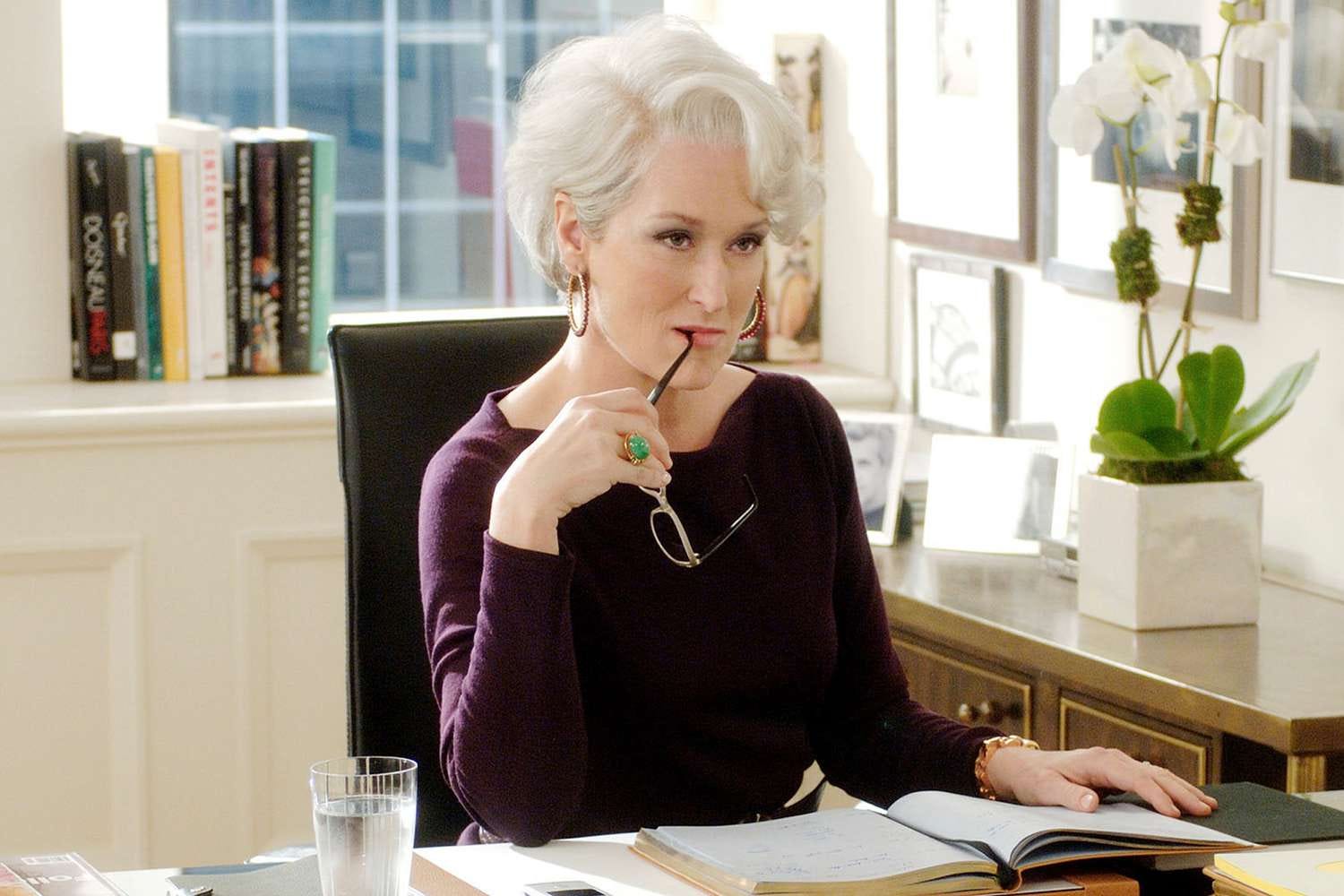
At the beginning of The Devil Wears Prada 2, the staff of Runway magazine has been tricked. They ran a glowing story on a fast fashion brand, reporting that the low prices came without low wages or other harms inherent in cheap clothes. The brand lied.
This is the movie’s instigating action and its central metaphor. Over the next two hours, the movie tells us that we, like Runway, have been tricked into believing the easy promises of the greedy, and into accepting that a cheap alternative is just as good as something that’s been painstakingly produced.
With Runway in crisis, corporate calls Andy Sachs (Anne Hathaway). Twenty years after quitting her job as assistant to editor-in-chief Miranda Priestly (Meryl Streep) and twenty minutes after being laid off from a hard news outlet, Sachs becomes Runway’s features editor. She thinks her job is to re-establish editorial credibility, but she soon learns that—like anyone else in the Content industry today—the real mission is to get clicks. Runway, Sachs’s old friend and stalwart art director Nigel (Stanley Tucci) says, is no longer a magazine. It’s essentially a social media brand that happens to print a few pages a month (“the September issue is so thin you can floss with it,” Priestly says).
The assignment is impossible. A respectable revisitation of the fast fashion story gets abysmal traffic, as do all the other stories that a montage shows Sachs laboring over—marking up printed copies and dropping drafts into a CMS. Sachs insists that while the stories she shepherds may not be popular, they’re good—informative, well-written, real journalism. It’s a familiar scene to anyone who has worked in the news business. Well, to anyone with integrity who has worked in the news business.
The collapse of our industry is usually told through drama and documentary. With The Devil Wears Prada 2, it’s presented as comedy. And that’s what it should be. The experience of working in a field that’s both tremendously important to the world and simultaneously undervalued by the audience (83% of Americans don’t pay for news) is as funny as it is tragic.
Imagine working for weeks on a story—traveling hundreds of miles, conducting dozens of interviews, studying archives, trading drafts between editors, commissioning photographers and designers, chasing down fact checks on statements that have been gnawing at you—and then watching as the resulting piece gets less than a tenth the clicks as a dashed-off blog post about a viral video the writer watched on their phone during the morning commute.
Imagine seeing a compilation of shaky phone videos of cats jumping at the sight of cucumbers (videos that are not the property of the person who posted the compilation), and then noticing that it has more views than everything you’ve ever published, combined. More people have watched it than watch most television news shows in a given evening.
These are among the indignities of professional journalism today (and for the last decade and a half).
As The Devil Wears Prada 2 continues, we get more scenes that are familiar to newsies. There’s the pressure from advertisers for freebies and softer treatment, the egregious cost-cutting imposed by overpaid consultants who talk in childish jargon, the hope for a rescue by a billionaire buyer. The sumptuous wealth of the first movie starts to look like the last gasp of prosperity in journalism (which it was).
One big idea in that first movie is that high fashion, while it may seem frivolous, is not. It’s art, and it gives both inspiration and aspiration. It also happens to be a good way to finance a magazine that publishes some great writing (Sachs mentions that Runway published Truman Capote and Joan Didion). The second movie applies this idea to journalism, and the old outlets that produced it. A glossy magazine may seem outlandishly expensive and overly fussy, but that’s because it should be. Journalism is not frivolous.
After consultant-imposed cost-cutting, Miranda Priestly is forced to fly economy and ride in an Uber. The movie plays it for laughs—the chic editor is offered the chance to buy a United Airlines snack box like the rest of us. But the movie also presents it as an affront to good taste—the scene reminds us that airlines (like any number of big companies) have been treating all of us like cattle for too long. Priestly (via Runway) represents what so many people aspire to. What’s inspiring about eating Doritos in coach? The legendary excesses of the old magazine industry hardly seem unwarranted given who can afford these comforts now—not the editors and staff of publications that spread ideas and shape culture, but finance guys and tech bros who are in it only for their own enrichment.
The sad truth is, it’s the latter group that most of the public supports. Maybe they don’t support it vocally, but in everyday actions, they certainly do. The traffic numbers make it quite plain.
Most of the audience has bought the lies of the new brand. They bought into Big Tech and don’t wonder whether the cheapest Content on offer—influencers’ sponsored posts, hot takes from amateurs working solo—might be poorly made substitutes for the real thing. They believe that quality isn’t something to pay for (again, 83% of people don’t pay for news), or they’ve accepted cheapness so much they don’t know what quality is.
Millions of people getting information online are like Andy Sachs in the original Devil Wears Prada. Instead of looking at two blue belts, they’re looking at two pieces of Content. One is a story that has been reported, vetted, fact-checked, art-directed, copy-edited, and looked over by perhaps a dozen professionals. The other is a TikTok of MrBeast eating his Feastables brand candy eggs. Do they see the difference?
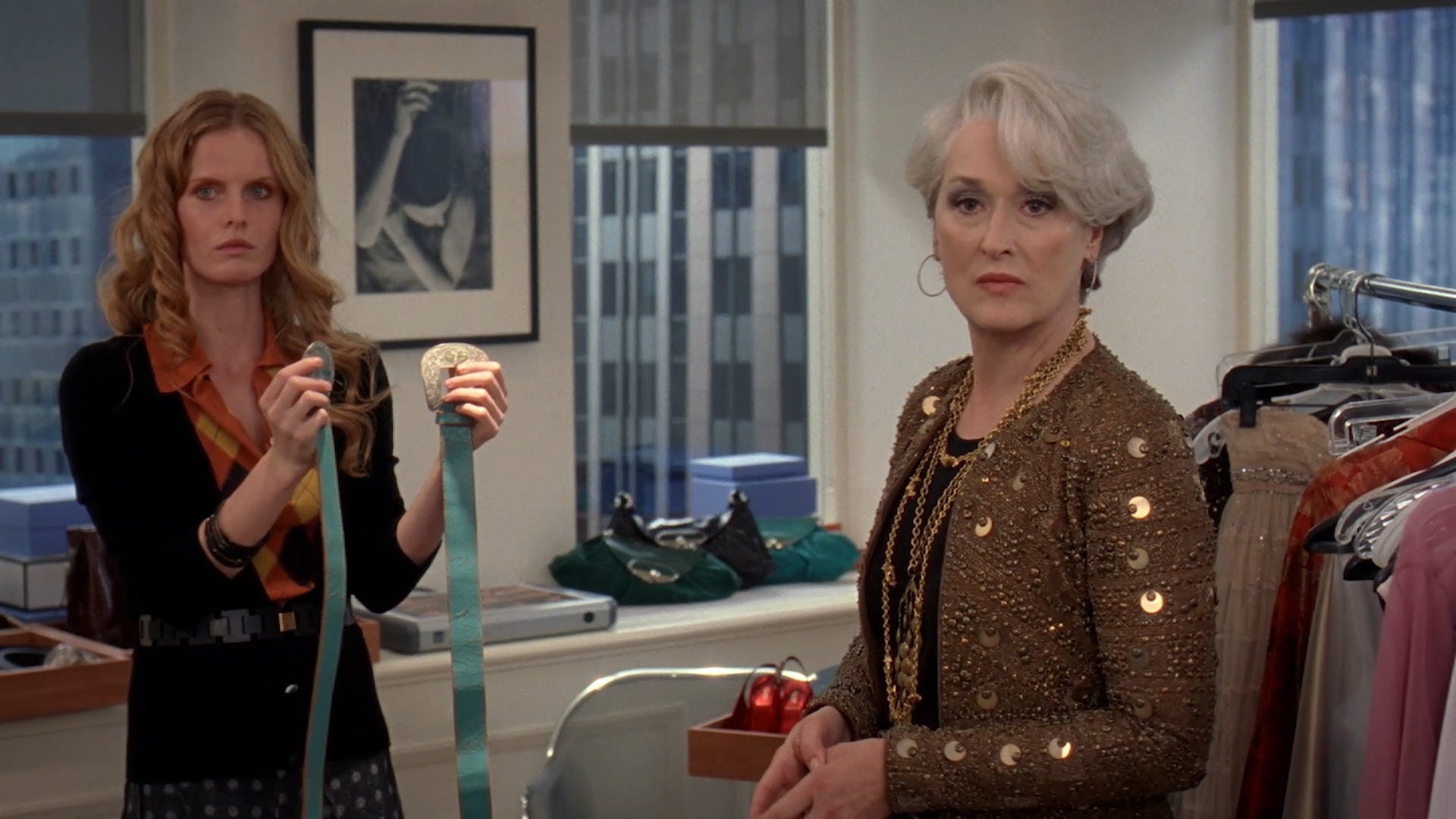
It doesn’t have to be as black-and-white (or as cerulean-and-seafoam) as I’m describing. You can enjoy inane memes and also subscribe to a magazine. You can follow influencers and also support journalists. But most people don’t. Why not? Is it a conscious decision to let valuable institutions die while numbing your mind on dopamine-inducing drivel? Does an addiction to easy consumption overpower your willingness to engage with something more meaningful? Or have you not even thought about it? It all happened so gradually, it just seems like the way things were meant to be.
I realize I’m basing my argument for supporting quality on a legacy sequel movie—the type of IP-driven cash-in that I’m inherently skeptical of. But there’s a lesson here, too. While watching The Devil Wears Prada 2, I kept thinking something that bothered me: “This is better than it needs to be.” It’s a cynical thought. I expected blatant call-outs to the first movie, easter eggs, and a general sense of laziness. There were a few references to the first installment, but the new movie works on its own—there’s thought behind the acting and production and the movie doesn’t take its audience or the revered status of the original for granted. It makes an effort to be good.
The filmmakers could’ve phoned it in. Much of the audience may very well have enjoyed the movie all the same. But what was most refreshing about The Devil Wears Prada 2 was the simple fact that the cast and crew didn’t accept what could’ve been a quick payday.
The news industry broke itself trying to play tech’s game and appeal to its algorithms. In Sachs’s determination not to publish clickbait, we see what a lot of journalists have come to understand—that was a mistake. We should’ve tried all the time. Yes, news (and any media) needs to adapt to the times, but it can’t be done on the terms of the technology we have or without remembering the value of what we’re making. And it can’t be done without an audience who is willing to stop accepting trash.