

The Pitt Is the Opposite of Doomscrolling
Season 2 is a thrilling look at the complexities of care

Since The Pitt first came out in 2025, many critics have embraced the term “competency porn” to describe the appeal of a show that, on paper at least, might not seem like an especially enjoyable watch. In each episode, viewers are exposed a vast array of injuries and illness. The chaos of the ER feels overwhelming and exhausting. The show isn’t glamorous or soapy. The doctors are serious people committed to doing their jobs well. And it’s been a stunning success—a show that is propulsive, heartfelt, and so committed to moral truths that criticism of the series usually comes back to how the writing can, at times, be a little didactic, offering viewers plainly stated morals over ethical ambiguity.
But is competency truly at the heart of The Pitt’s overwhelming appeal? I argue the real reason so many have tuned in every week is that watching physicians painstakingly clean a patient’s wound is that it acts as a cultural palate cleanse. The Pitt’s emergency room offers an antidote to a prestige TV landscape dominated by shows like The White Lotus, Succession, and Industry, about self-involved narcissists. Instead, here’s a serious show, equal parts heart-wrenching and funny, about characters who are so deeply devoted to caring for others that they sometimes forget to care for themselves.
In second season of The Pitt, the work of caring for others isn’t portrayed as easy or aspirational as the term “competency porn” might imply. It’s depicted as both meaningful and draining. Each character wrestles with bodily and mental exhaustion. There is little time for rest or attend to personal concerns or to even take a break to eat or use the restroom, as more and more patients are wheeled in and all the computers go down.
Over the course of the season, Dr. Robby, the senior emergency attending physician, evolves into an increasingly thorny main protagonist. Though deeply devoted to his patients, he is also shown to be increasingly reckless. His sabbatical plans involve a helmet-less motorcycle journey, the details of which he refuses to fully share with his colleagues. “I’m not sure I want to be here anymore,” he tearfully confides to a close friend. As tensions rise over the course of the day, Dr. Robby struggles to retain composure, increasingly lashing out at his fellow physicians rather than meeting situations with the grace and empathy he prides himself on.
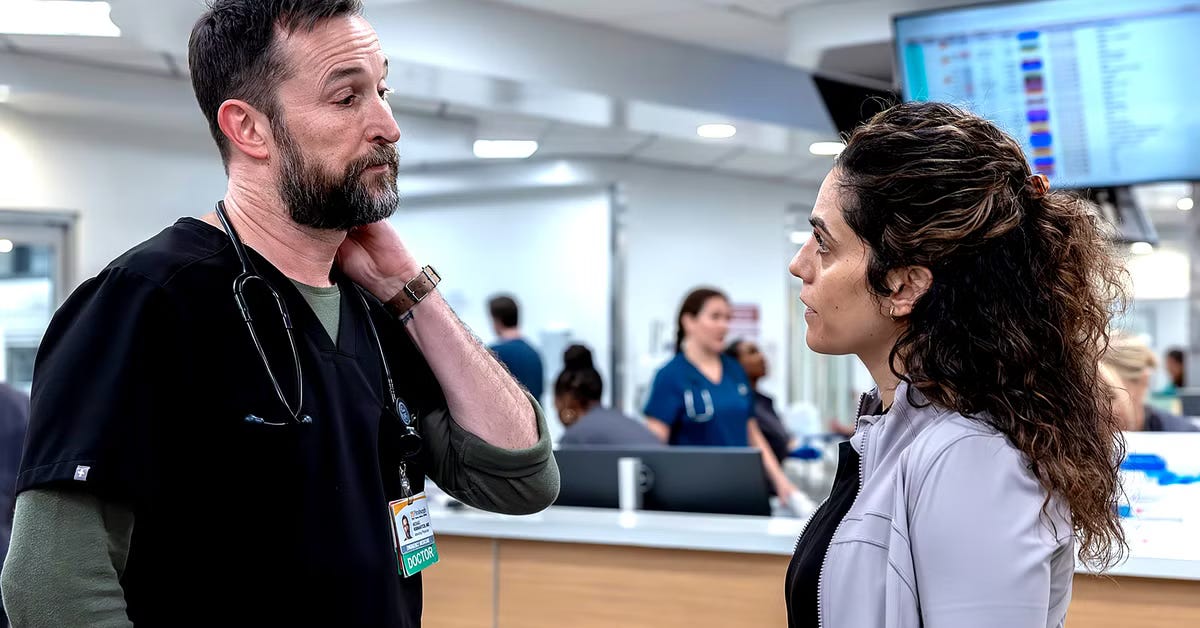
It’s a daring move. To insist on the complexities of care is to demand that we see it as a skill. To do their job effectively, doctors must set aside their own personal traumas to focus on the emergency at hand. When engaging with a patient, they must be practical, pragmatic, maybe even a little cold. They focus on the body, not the soul: how fast is the pulse? How much oxygen in the blood? They need emotional distance to look at a gaping wound and not just start sobbing.
This is the opposite of doomscrolling. At a time when social media has conditioned us to sift through portraits of human suffering quickly, numbing us to their full effect, The Pitt instructs us to not just see the humanity in every injured body, but to stay present with them.
Nowhere is this clearer than in episodes like, “No Time for Goodbye” where we watch beloved patient Louie die after having a pulmonary embolism. It’s a harrowing and heartbreaking scene as we witness doctors who love Louie rush to try and save him. When they fail, the camera doesn’t stop filming. We watch nurses clean and care for the body and prepare him for viewing. “May his memory be a blessing,” Dr. Robby says, invoking the heartfelt Jewish expression of mourning, while the newest nurse on the team tentatively reaches for Louie’s hand.
This isn’t frictionless “competency porn” created to reassure viewers that responsible adults exist; it’s deeply human storytelling. Throughout the show, we see how doctors and patients aren’t perfect, that real-life choices are marked by their complexity, and that actions have consequences, many of which are irreversible. If the show moves you to action, it’s not because you’ve been manipulated. It’s because the narrative invited you to pay closer attention.
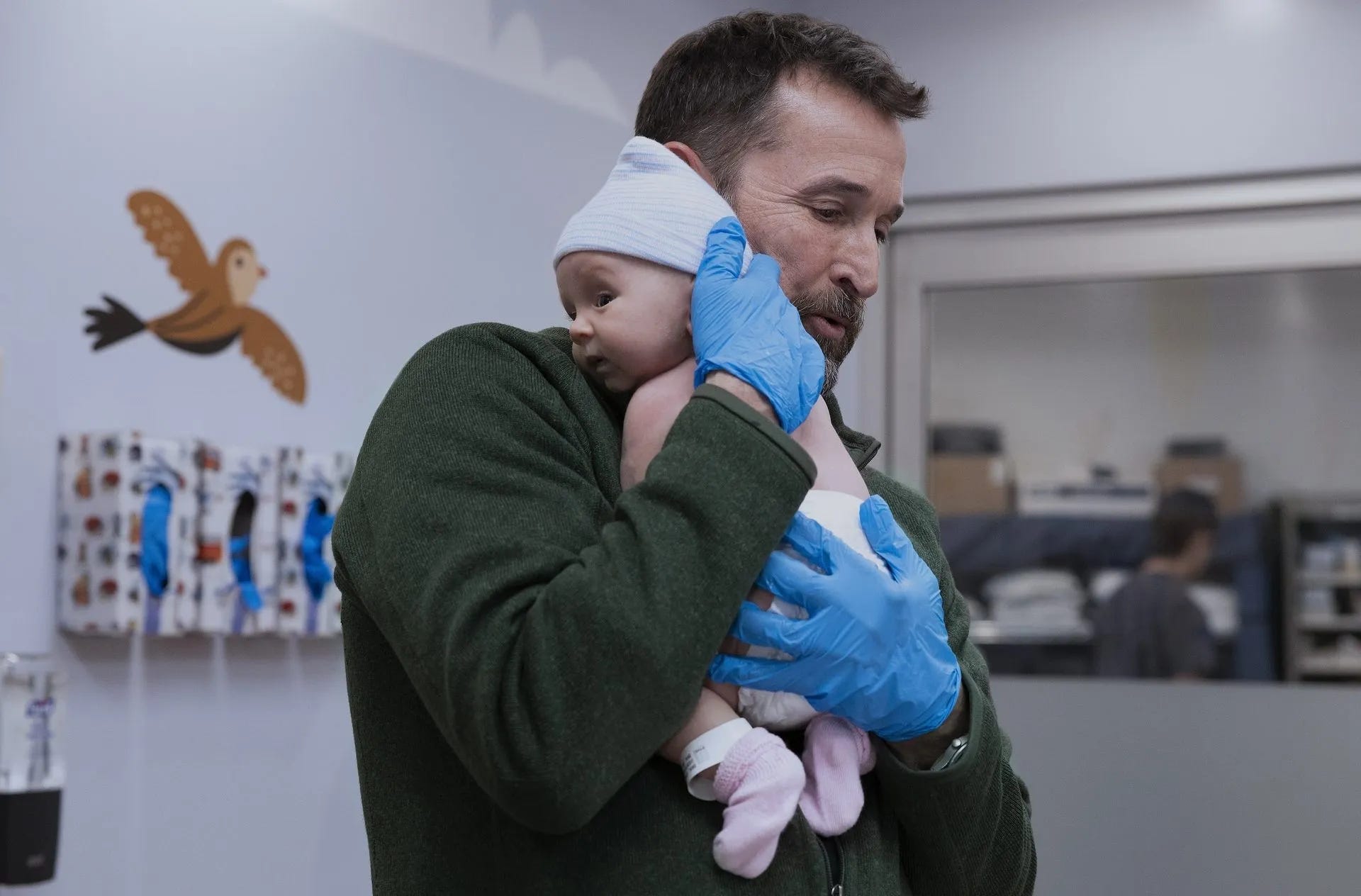
I would argue that it’s also the show’s insistence on hope that has stuck a particular chord with viewers. At a time when we are often given two storytelling options: cheerful comfort viewing to zone out to, or emotionally exhausting narratives that highlight a slew of social and cultural problems, The Pitt both refuses to eschew complexity, while also resisting a culture of despair. In the final moments of Season 2, we watch Dr. Robby cradle an abandoned infant, “You’ve got so many wonderful things to see and so many people to love ahead of you,” he says, as the little one drifts to sleep, and Robby slowly starts to reimagine his own future.
Terrific piece, Arielle. I’ll admit I fell into the “competency porn” trap watching season 1, but I love even more what they’ve done with season 2. I’ve been frustrated by some reactions I’ve read to this season. Some fans just cannot handle Dr. Robby not being the noble hero he appeared to be in season 1, but it’s so deep and real. (And I’d argue he still is a hero to his patients- just not to his co-workers or anyone in his life.)
It's an amazing show that has captivated me with its humanity and ability to craft these three dimensional characters. Nothing about the show is easy, but that's by design. We live in a world where it's all to easy to ignore pain, and where it's also sadly easy to choose to marinate in despair. You've written what might be the best encapsulation about what makes The Pitt tick, and why it's so resonant, that I've ever read. Great job and thanks.